


Jump to Chapter:
Million Dollar Grooves | Mastering the Shuffle | Mastering the Swing Beat | What is the Surf Beat?
Million Dollar Grooves:
Building Your Foundation
By Sean J. Kennedy
Two drumbeats stand out as foundational elements in countless pop and rock hits. These aren't just any rhythms; they're the foundation upon which much popular music is built. Mastering these "Million Dollar Grooves" is an excellent starting point for any aspiring drummer, offering a perfect blend of simplicity and versatility. They are particularly accessible for beginners. While seemingly simple, especially in their bass drum patterns, these beats are the driving force behind some of the most influential and popular music ever recorded.
The core of your practice lies in developing a smooth, consistent groove. Forget about speed; a rushed, uneven beat isn’t good for anyone. Remember the wisdom of drumming legend Liberty DeVitto: "The beat should move the feet!" This principle guides our practice. It's not just what you play but how you play it and how it resonates with the listener. Our focus will be on achieving that captivating, foot-tapping groove.
As you become more comfortable with the mechanics of these beats, you can begin exploring nuances like accents (emphasizing specific notes) and ghost notes (playing notes softly). These subtle variations add depth and character to your playing.
To aid your initial learning, we've included counts (1 + 2 +...) to mark the position of beat 1. This helps you internalize the rhythmic structure. Developing your internal sense of time and rhythm is key to confident and expressive drumming.
All exercises are in common time (4/4), the most common time signature in popular music. They also utilize a fundamental "backbeat" pattern with eighth notes on the hi-hat and snare drum. The hi-hat, typically played with the right hand, provides a consistent rhythmic pulse. The snare drum, usually played with the left hand, falls on beats 2 and 4, creating the characteristic backbeat feel. This backbeat is the rhythmic heart of countless pop, rock, and other genres.
In this context, beats 2 and 4 are accented, emphasizing or playing with more force. This emphasis is often indicated with an accent mark (>) above the note.
Let's begin by focusing on the first "Million Dollar Groove." This beat emphasizes a strong, driving feel often used in rock anthems. The bass drum plays on beats 1 and 3, anchoring the rhythm. The snare, as mentioned, is on beats 2 and 4. The hi-hat plays eighth notes throughout, creating a continuous flow. Practice this beat slowly and deliberately, ensuring each note is played clearly and precisely. Pay close attention to the coordination between your hands and feet.
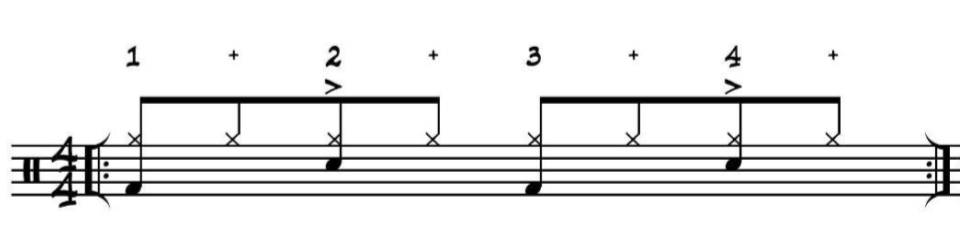
The second, "Million Dollar Groove," introduces a slight variation, often found in more melodic pop and rock songs. This beat maintains the hi-hat and snare pattern but changes the bass drum to play on beat one and the "+" of beat 2. This subtle shift creates a slightly more syncopated feel, adding a touch of rhythmic complexity. Again, start slowly and focus on achieving a smooth transition between the bass drum notes.
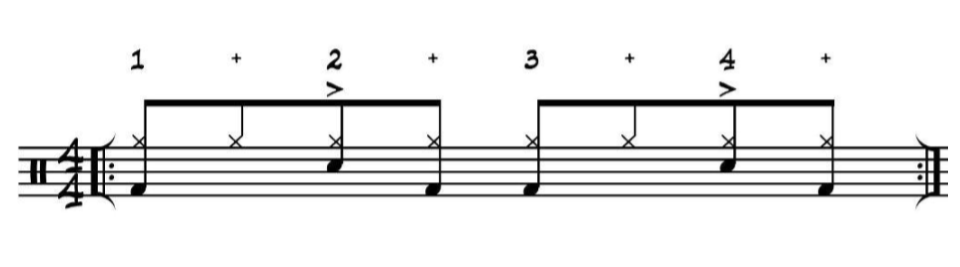
Once you're comfortable with the individual beats, practice transitioning between them. This builds your versatility and prepares you for playing in real-world musical situations. Experiment with slight variations in dynamics and note placement to personalize your sound. Remember, playing the notes and making the beat feel good is the goal. These two "Million Dollar Grooves" are your foundation. Master them, and you'll be well on your way to creating compelling and infectious grooves.
Here are some drummers known for their strong, reliable playing and great feel, which is precisely what these "Million Dollar Grooves" are all about:
For that solid, driving rock feel (like the first beat):
- Charlie Watts (The Rolling Stones): Watts was the master of simple, powerful grooves. He consistently laid down the foundation for the Stones' music, and his playing on songs like "Brown Sugar" or "Start Me Up" is a perfect example of that driving rock beat.
- John Bonham (Led Zeppelin): Bonham's drumming was known for its power and groove. While he often played complex fills, his basic rock beats were incredibly solid and impactful. Listen to "Rock and Roll" or "Whole Lotta Love" for examples.
- Phil Rudd (AC/DC): Rudd's drumming is the definition of "in the pocket" rock drumming. His playing is simple, direct, and incredibly effective. Check out "Back in Black" or "You Shook Me All Night Long."
For the more melodic, slightly syncopated feel (like the second beat):
- Ringo Starr (The Beatles): Starr's drumming is often overlooked, but he was a master of crafting the perfect groove for the song. His playing on songs like "Come Together" or "Ticket to Ride" demonstrates his ability to create a melodic and engaging rhythmic backdrop.
- Jim Keltner: A highly versatile session drummer, Keltner has played with everyone from John Lennon to Bob Dylan. He has a knack for creating grooves that are both subtle and powerful.
- Steve Jordan: Jordan is another incredibly versatile drummer who has played with a wide range of artists. His playing is known for its groove and feel, and he's a master of adding subtle nuances to his beats.
General recommendations for studying great drumming:
- Listen actively: Don't just passively listen to the music. Focus on the drums and try to hear what the drummer is playing. Pay attention to the bass drum, snare drum, hi-hat, and cymbals.
- Transcribe: Try writing out the drum parts you hear. This is a great way to develop your understanding of rhythm and groove.
- Watch videos: Many videos of drummers playing are available online. Watching these videos can help you see how the drummers play the beats and give you ideas for your playing.
These are just a few suggestions, and many other great drummers are out there. The best way to find drummers you like is to explore different music genres and listen to various players. Most importantly, have fun and enjoy learning and discovering new music!
Mastering the Shuffle: Three Essential Grooves
By Sean J. Kennedy
Let’s explore three distinct shuffle grooves, each with its own regional flair and versatility across various musical genres. Though these subtle variations may seem minor, they significantly impact the feel of a track, influencing styles from rock and pop to jazz and beyond. We will examine the Chicago Shuffle, which originates from the rich blues scene of the Windy City; the Texas Shuffle, rooted in the deep blues and country traditions of the Lone Star State; and the Jazz Ride Shuffle, which embodies the swinging rhythm of jazz from New York's vibrant music scene. All three grooves incorporate the iconic "four on the floor" bass drum pattern.
The Chicago Shuffle: A Foundation in Swing
The Chicago Shuffle is an excellent starting point for anyone interested in learning shuffle rhythms. It is named after the city where it became a fundamental element of the blues sound. Emerging from Chicago’s vibrant blues scene, this groove has become synonymous with the city’s rich musical history.
In this shuffle, you'll use your right hand on the ride cymbal and your left hand on the snare drum. Both hands strike on the first and third subdivisions of the triplet, creating the signature "swing" feel. The snare accents beats 2 and 4, which emphasizes the backbeat. The bass drum plays on all four beats, establishing a steady groove, while the hi-hat, played with your left foot, reinforces the backbeat by striking on beats 2 and 4.
This shuffle is highly adaptable and is frequently used in blues, rock, and pop music. Its simple yet powerful structure makes it perfect for mastering shuffle rhythms.
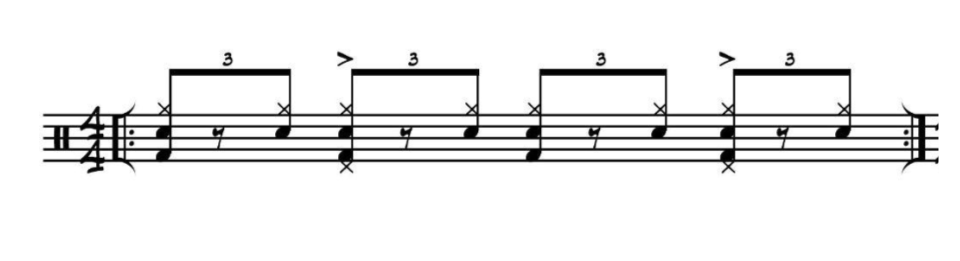
The Texas Shuffle: A Smoother Approach
The Texas Shuffle builds upon the Chicago Shuffle, adding a subtle yet impactful twist. Its name is closely tied to Texas’s rich musical heritage. Rooted in the state's blues and country traditions, this groove captures the relaxed yet rhythmic energy of the Lone Star State's music scene.
Unlike the Chicago Shuffle, which features broken triplets on the ride cymbal, the Texas Shuffle uses quarter notes, creating a smoother, more laid-back groove. Despite this change, the patterns for the snare, bass, and hi-hat remain the same, maintaining the backbeat and steady four-on-the-floor rhythm.
This shuffle is a favorite in blues and rock, offering a grounded, less syncopated vibe compared to the triplet-driven Chicago Shuffle. It brings a laid-back, yet still driving energy that reflects the essence of the Texas sound.
The Jazz Ride Shuffle: A Lighter Touch
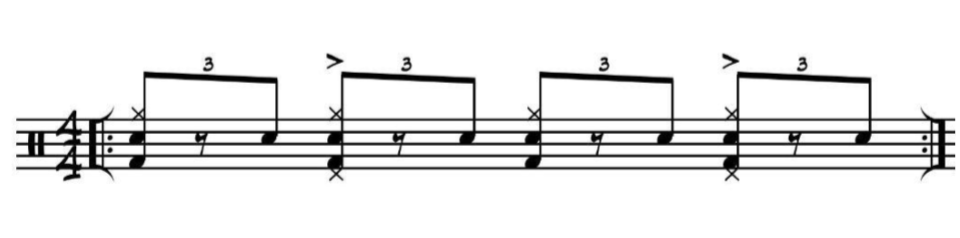
The Jazz Ride Shuffle draws inspiration from the Chicago Shuffle but incorporates a level of refinement characteristic of jazz, particularly the style that developed in New York City. While the Chicago Shuffle maintains a triplet feel, the Jazz Ride Shuffle skips the third triplet subdivision on the ride cymbal. This subtle adjustment creates a more open and airy rhythm, resulting in a lighter, more swinging feel typical of jazz.
In this groove, the snare accents beats 2 and 4, the bass drum maintains a steady pulse on all four beats, and the hi-hat reinforces the backbeat on 2 and 4, providing a solid foundation. The Jazz Ride Shuffle is a nuanced and sophisticated groove that requires precision to capture its signature swing. It's ideal for exploring complex rhythmic variations and refining your technique for a lighter, more fluid touch, reflecting the smooth swing of New York City jazz.
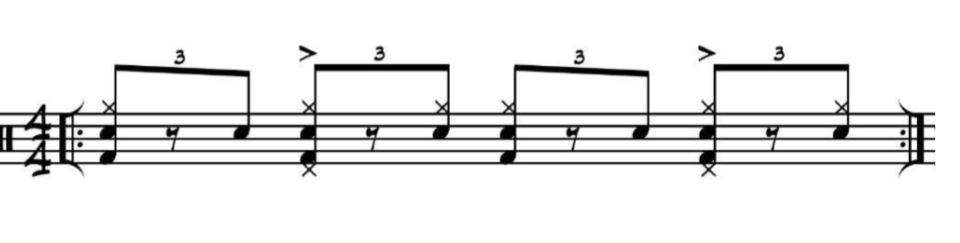
Here are some drummers known for their mastery of these shuffle grooves:
Chicago Shuffle:
- Bernard Purdie: A legendary session drummer known for his deep groove and feel. While credited with the "Purdie Shuffle" (a half-time shuffle), his mastery of standard shuffles is undeniable. Listen to his work with Steely Dan.
- James "Jimmy" Madison: A sought-after drummer who excelled in many genres, including blues and rock, where the Chicago shuffle is prevalent.
- Jim Keltner: A versatile drummer known for his work with many rock and pop artists. He has a natural feel for the shuffle.
Texas Shuffle:
- Levon Helm (The Band): Helm's drumming was the heartbeat of The Band. His Texas Shuffle grooves were soulful and suited their rootsy sound.
- Charlie Watts (The Rolling Stones): Watts's understated yet powerful drumming was key to the Stones' sound. He often used a Texas Shuffle feel, particularly in their blues-influenced songs.
- Earl Palmer: A prolific session drummer who played on countless hits. His feel for the Texas shuffle was impeccable.
Jazz Ride Shuffle:
- "Papa" Jo Jones: A pioneer of jazz drumming, Jones was a master of the swing feel and the ride cymbal. His innovative use of the ride cymbal laid the foundation for many jazz drummers.
- Art Blakey: Known for his powerful drumming, Blakey also profoundly understood the swing feel and the ride cymbal. Listen to his work with the Jazz Messengers.
- Max Roach: A legendary bebop drummer, Roach was a technical master and creative player. His ride cymbal work was exceptional, and he often incorporated the Jazz Ride Shuffle.
Many drummers are versatile and can play across different styles. These are just a few examples of drummers known for mastering these shuffle grooves. Exploring their music is a great way to learn more about the nuances of each style. Don't limit yourself to these drummers; countless others have contributed to the evolution of these grooves.
General recommendations for studying great drumming:
- Listen actively: Don't just passively listen to the music. Focus on the drums and try to hear what the drummer is playing. Pay attention to the bass drum, snare drum, hi-hat, and cymbals.
- Transcribe: Try writing out the drum parts you hear. This is a great way to develop your understanding of rhythm and groove.
- Watch videos: Many videos of drummers playing are available online. Watching these videos can help you see how the drummers play the beats and give you ideas for your playing.
These are just a few suggestions, and many other great drummers are out there. The best way to find drummers you like is to explore different music genres and listen to various players. Most importantly, have fun and enjoy learning and discovering new music!
Mastering the Swing Beat: A Foundation for Rock and Jazz
By Sean J. Kennedy
This lesson will guide you through the fundamental swing drum beat, a cornerstone of early rock and jazz drumming. Understanding this rhythm is crucial for aspiring drummers, providing a solid foundation for exploring diverse musical styles.
Understanding the Swing Feel
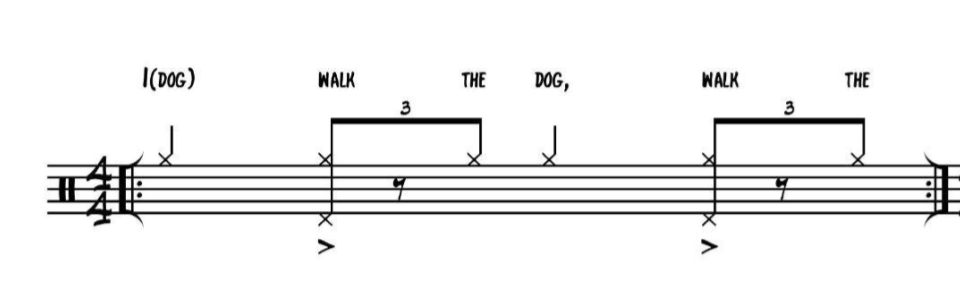
Much of jazz music revolves around triplet subdivisions. Early jazz drumming, often taught orally, relied on simple phrases to convey the swing rhythm. A common and effective phrase is: "I walk the dog, walk the dog, walk the dog, etc."
This phrase perfectly embodies the swing feel. Each syllable corresponds to a note played on the ride cymbal. This creates the characteristic "swing" or "triplet" feel.
Building the Basic Swing Beat
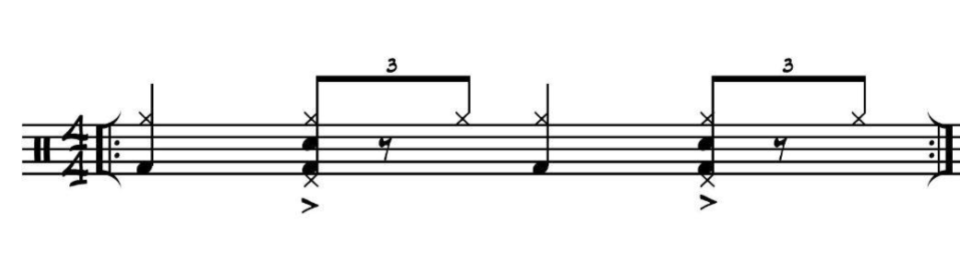
We'll break down the swing beat into four progressive permutations to truly grasp the swing feel. These examples focus on the ride cymbal and hi-hat first, the most critical instruments needed to lock in with the bass player. Everything else is extra; these are the most critical instruments to create a swing style.
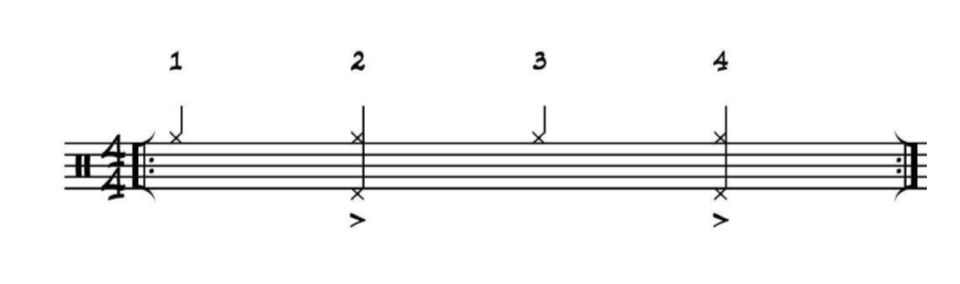
- Example 1: The Foundation (Ride Cymbal and Hi-Hat) This example focuses on the most crucial elements: the ride cymbal and hi-hat. Play quarter notes on the ride cymbal and beats two and four with your hi-hat foot. Notice how the hi-hat foot (on beats two and four) is accented. That is what the band, especially the bass player, is listening to. The snare and bass drum are not the driving timbre in this style; it's the ride and the hi-hat.
- Example 2: Adding the "I Walk the Dog" Rhythm Now, add the "I walk the dog" rhythm to the ride cymbal, and say it as you play it. This should have a floating, lilting feel, never plodding. Maintain the hi-hat on beats two and four, accented.
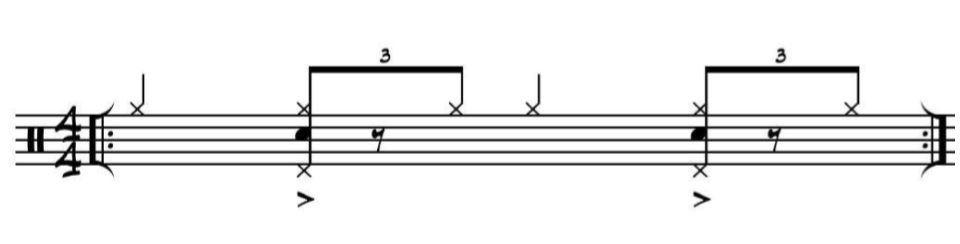
- Example 3: Snare Drum on Beats 2 and 4: Add the snare drum on beats 2 and 4. Keep the left foot accent on the hi-hat, aiming for a crisp "chick" sound. The ride cymbal continues with the "I walk the dog" rhythm.
- Example 4: The Bass Line Finally, add the bass drum. The bass should be "feather-pedaled," which is very understated and more felt than heard. It reinforces the walking bass line.
From Swing to Early Rock
Early rock and roll evolved directly from the big band swing music of the 1940s. The swing beat is, therefore, a fundamental element in early rock drumming. The key differences often lie in the dynamics and instrumentation.
While the core rhythm remains the same, early rock drumming often features a louder, more driving feel. The bass drum is typically played on all four beats (four on the floor), adding to the energy and intensity. In contrast, swing drumming might use the bass drum more sparingly, often feathering it or using it for accents.
For example, a swing tune by Glenn Miller would likely feature a lighter touch, while a rock and roll song by Bill Haley and The Comets would emphasize the driving four-on-the-floor bass drum and a louder overall volume. The style of the music dictates the appropriate dynamics and instrumentation.
Masters of Swing Drumming
To truly understand the nuances of swing drumming, it's essential to listen to the masters. Here are a few drummers who were pivotal in the development of swing drumming:
- "Papa" Jo Jones: A pioneer of swing drumming, Jones revolutionized the role of the ride cymbal and established many of the foundational concepts of swing rhythm.
- Gene Krupa: Known for his energetic and flamboyant style, Krupa brought a dynamic and exciting approach to swing drumming.
- Buddy Rich: A virtuoso drummer with incredible technical skill, Rich pushed the boundaries of swing drumming with his speed, precision, and creativity.
- Chick Webb: A robust and influential drummer, Webb led his big band and helped launch the career of Ella Fitzgerald.
Listening to these drummers and many others will provide invaluable insights into the subtleties and complexities of swing drumming. Pay attention to their ride cymbal work, hi-hat accents, and bass drum and snare use. By studying the masters, you can develop your swing feel and incorporate these essential rhythms into your playing.
General recommendations for studying great drumming:
- Listen actively: Don't just passively listen to the music. Focus on the drums and try to hear what the drummer is playing. Pay attention to the bass drum, snare drum, hi-hat, and cymbals.
- Transcribe: Try writing out the drum parts you hear. This is a great way to develop your understanding of rhythm and groove.
- Watch videos: Many videos of drummers playing are available online. Watching these videos can help you see how the drummers play the beats and give you ideas for your playing.
These are just a few suggestions, and many other great drummers are out there. The best way to find drummers you like is to explore different music genres and listen to various players. Most importantly, have fun and enjoy learning and discovering new music!