
From Chlorine to Carnegie Hall
Movement I: The Chlorine and “Baker Street” Epiphany
This essay is part of a four-movement series, From Chlorine to Carnegie Hall.
Movement I begins at the earliest moment I can remember music becoming something more than background sound.
A recent article from The New Yorker discussed the slow, sad end of the late-night house band, and it got me thinking. The piece lamented the loss of an era where musicians like Paul Shaffer and Doc Severinsen were household names—and I realized the sentiment of the article resonated deeply with me. It brought me back to my own journey with music, and how some of my most important musical discoveries were tied to the very institutions that the article mourned.
As I get older, I often find myself searching for my earliest musical memory—that exact moment when music transcended background noise and fully captured my attention. I know my parents always had a wide variety playing at home, but what was the very first piece that truly pulled me in?
I often wonder the same thing about my students.
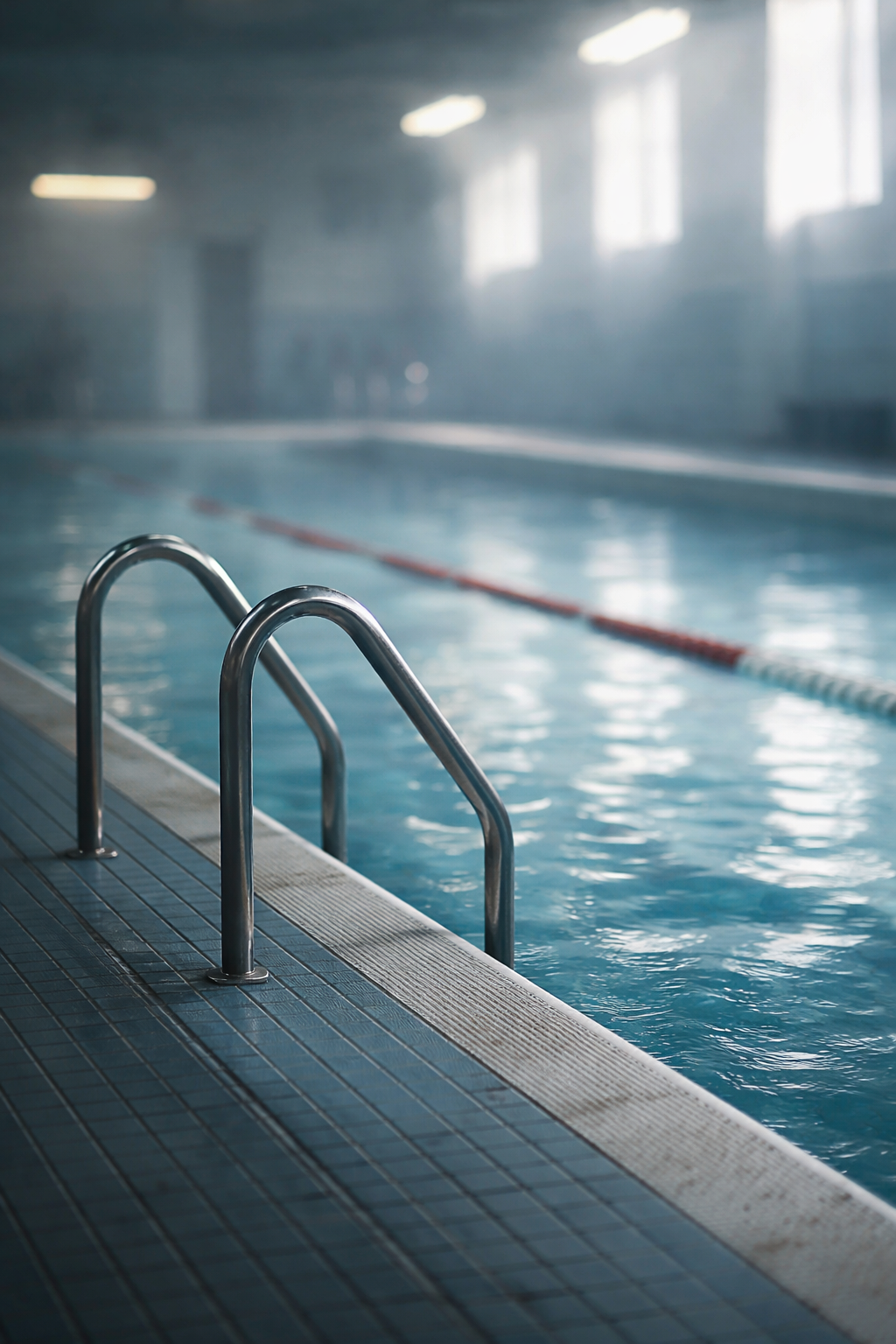
For me, it happened when I was in kindergarten, taking swimming lessons at the local middle school. Whenever I think of my earliest musical memory, I also think of the smell of chlorine.
I remember the usual beginner stuff: clinging to the wall, terrified; blowing out the pretend candles; kicking with a kickboard—all the standard things you do in an elementary swim lesson.
But the clearest, most vivid memory I have from that experience is the music blasting over the sound system. At this pool, it was customary to play popular music during swim lessons. It was the era of smooth instrumentals, and I remember hearing both Chuck Mangione’s Feels So Good and one of the big hits at the time, Gerry Rafferty’s Baker Street. The beginning is mysterious, smooth, and legato—but what I remember most clearly is holding onto the wall of the pool and hearing that beautiful saxophone solo by Raphael Ravenscroft. I can still see and smell exactly where I was in the pool. I remember the other kids and the instructors around me. I was transfixed—completely hypnotized by that saxophone solo.
In that moment, as a kindergartner, I realized that music was going to be a powerful force in my life.
Every time I hear that song, I’m transported back to that swimming pool, clinging to the wall for dear life—but mentally, I’m somewhere else, already on the road to discovering the power of music. Or at least at the beginning of my conscious musical journey.
Here’s a little side note about that cataclysmic musical moment: at the end of that same swim lesson, a woman in a swim cap—who I thought was old (though she was probably in her thirties)—blew a whistle. Her name was Mrs. K—just the initial K—and she was in charge. She ordered every kid out of the pool and marched us to the deep end, where the diving board loomed over the 12-foot section.
Keep in mind: this was my first swim lesson ever. And yes, Baker Street was still blasting over the pool speakers.
Mrs. K told every student, “You will jump off the diving board today.” I didn’t want to. I was terrified. But I do remember being either pushed or gently nudged off, and suddenly, I was falling into 12 feet of water.
The wild part is—they let you struggle for a bit. Just long enough for your head to surface. It was a kind of tough-love lesson. After that day, I was never again terrified of the water. I never became a great swimmer, but I learned how to keep my head above water. The lifeguards helped me to the wall, and from then on, jumping off the diving board became easier.
I use this story all the time with my music students, especially my jazz students who are scared to jump in and improvise. My best advice to them is: just jump in and see what happens. I’m here as a lifeguard to help you, but I’m not going to let you drown.

And all of that—music, fear, discovery—is forever tied to Baker Street by Gerry Rafferty, the first song I consciously remember having a real impact on my life.